In this guide
Harvesting yeast means taking the healthy slurry from the cone of a finished batch and pitching it into the next one. A conical fermenter with a dump valve turns it into a five-minute job. Keep the slurry cold, use it within two weeks, and one pack of yeast brews you batch after batch.
The short version
- When: fermentation finished, ideally after a cold crash
- Take: the creamy slurry, after dumping the first 50–100 ml of trub
- Store: sanitised jar, fridge, lid loose
- Use: within 2 weeks; older slurry goes into a starter first
Why harvest at all
- One pack, many batches. With clean handling, yeast is good for seven to ten generations.
- A big, fast start. A cup of fresh slurry holds more healthy cells than a sachet, so the next batch takes off quickly.
- Yeast you know. Same strain, same brewery, same behaviour. Your beer gets more consistent.
Why a conical makes it easy
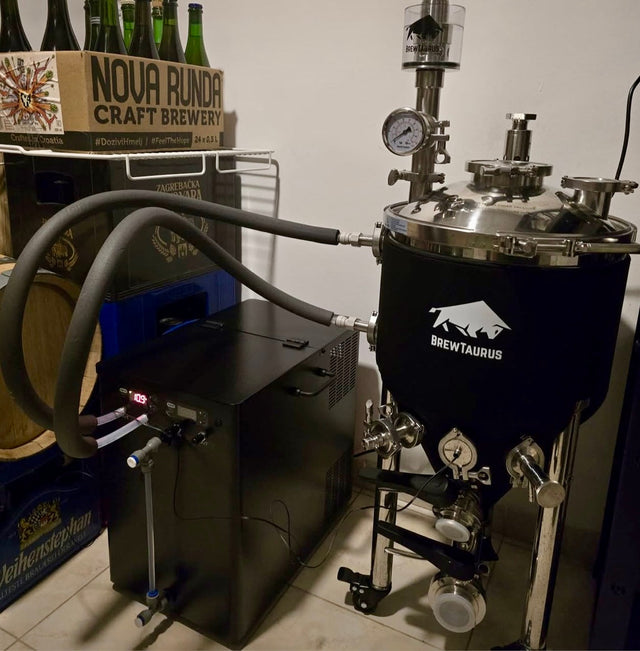
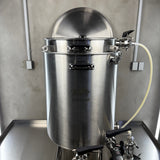
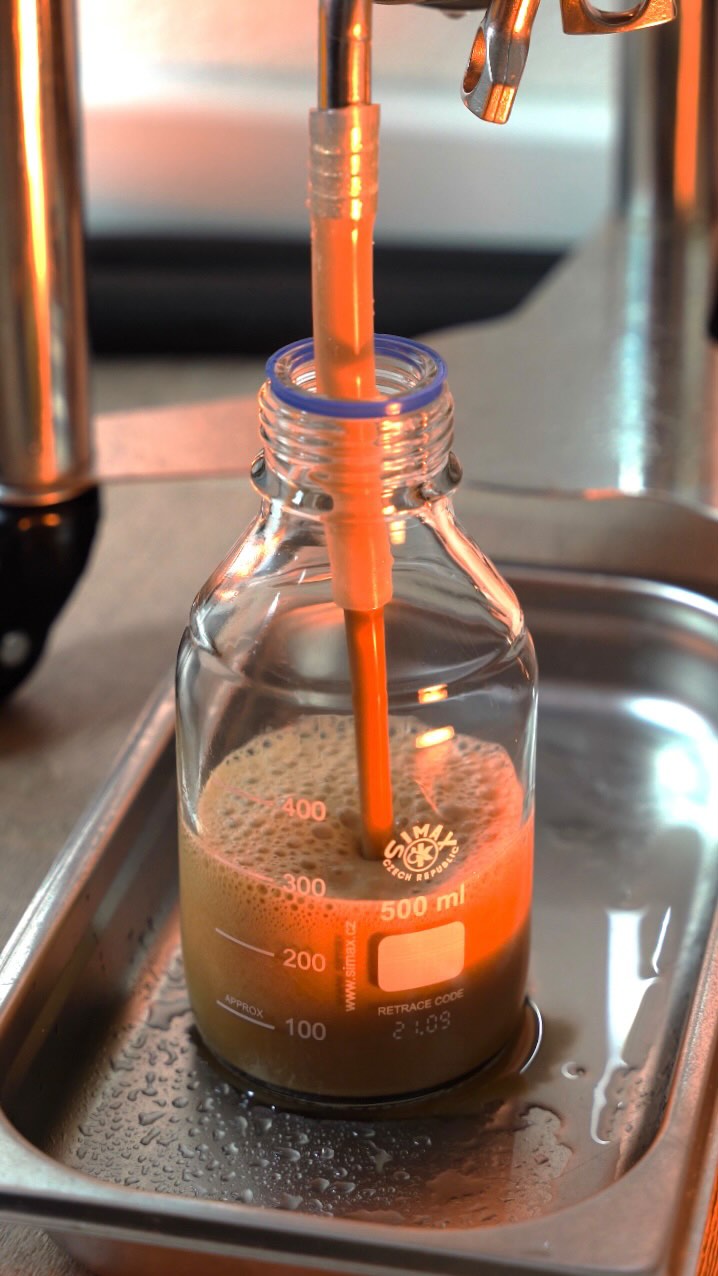
Yeast settles in the cone. Open the dump valve at the bottom and the slurry comes out on its own: no tilting, no siphon, no scooping out of a bucket. Our F, PF Jacketed and PF Fully Jacketed tanks all have a 2" TC dump port, so you can fit a sight glass and see exactly what is coming out.
Step by step
- Let fermentation finish. Gravity stable for a couple of days. A cold crash packs the yeast tighter and makes the next steps cleaner.
- Sanitise. Dump valve, fittings, jar and lid. Anything the slurry touches.
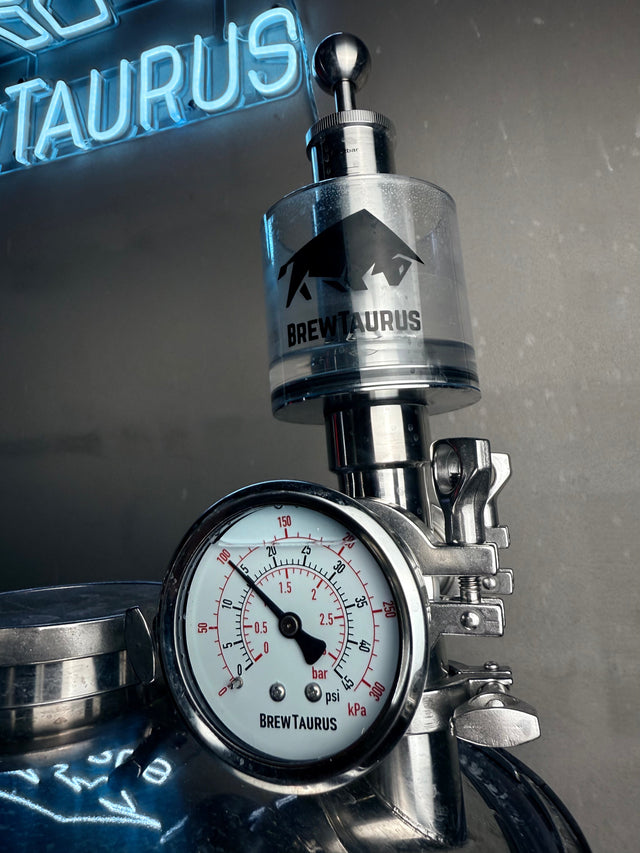
- Vent most of the pressure. If the tank sits at 0.7–1.0 bar (10–15 PSI), let it down first. Under a full bar the slurry leaves faster than any jar can catch it.
- Dump the first 50–100 ml. Dark trub and spent cells come out first. When the flow turns creamy and tan, you have reached the good yeast.
- Collect and label. Fill the jar, close the lid loosely and write down strain, date, generation and the beer it came from. Trust me, “probably US-05?” is not a pitching strategy.
- Into the fridge. Leave the lid loose. The yeast keeps releasing a little CO₂ and a sealed glass jar can burst.
How long it keeps
| Slurry age | What to expect | What to do |
|---|---|---|
| Up to 2 weeks | Healthy and ready | Pitch it straight in |
| 2 to 4 weeks | Fewer live cells every day | Wake it up with a starter |
| Over 4 weeks | Usually half or less still alive | Starter, or a fresh pack |
How much to pitch
For a 20 L ale at around 1.048, about 250 ml of fresh, thick slurry is a full pitch. A lager or a strong beer needs roughly twice as much. Older slurry has fewer live cells, so pitch more or build a starter.
When to start fresh
- After seven to ten generations. Even with clean handling, the yeast drifts over time.
- When it changes. Slower start, lower attenuation or a flavour you did not expect: buy a new pack.
- Plan the order. Brew light to dark and clean to hoppy. Yeast from a stout will tint your pilsner, and slurry from a heavily dry hopped IPA carries the hops with it.
Quick answers
Can I harvest dry yeast?
Yes. Once a sachet has fermented a batch, its slurry is like any other.
How long can I keep harvested yeast?
Pitch it within 2 weeks. After about 4 weeks, half or more of the cells are usually dead, so make a starter first.
Can I harvest from a pressure fermenter?
Yes. Vent most of the pressure, open the valve slowly and watch the sight glass. The full routine is in how to dump yeast.
Do I have to cold crash first?
No, but it helps. Cold yeast settles tighter, so the slurry comes out thicker and cleaner.
Brewing under pressure? Start here: How pressure fermentation works
Questions about your setup? Write to info@brewtaurus.com.
Save the slurry, skip the sachet.
Dan, founder of BrewTaurus